Get in touch

MIT says 95% of AI pilots fail

We are the other 5%.

Cat Criminals is an AI solutions company that knows how to push AI far beyond its defaults. Explore our platforms and see what that could mean for your business.

Night Vision

Most AI projects die in the dark.

Move the lens. See what killed them.

~95% of enterprise GenAI pilots show no measurable impact. MIT NANDA, 2025

Hover a light to open the case.

01 / The Deterministic Mindset

“They gave probabilistic AI to people trained to eliminate probability.”

Traditional software engineering rewards predictability, rigid logic and deterministic behaviour. Generative AI introduces an entirely different paradigm.

We see experienced teams trying to force models into conventional software patterns, often creating unnecessary complexity and limiting what the technology can actually accomplish.

Our territory: AI-native architecture, agentic systems and rethinking conventional engineering approaches.

02 / The Model Empathy Gap

“The code makes sense. The model doesn't see the world the way you do.”

A perfectly valid implementation can produce terrible AI results. Developers focus on fixing code when the real problem lies in how the model interprets language, context, instructions and information.

Working effectively with AI requires understanding its behaviour, not merely its APIs.

Our territory: Model behaviour, context engineering, prompting, evaluation and AI quality.

03 / The Adoption Vacuum

“They built something brilliant. Nobody wanted to use it.”

Millions invested in AI initiatives. Excellent engineering. Impressive demonstrations. And almost no thought given to how employees will actually incorporate the technology into their work.

Adoption isn't something you organise after delivery. It has to influence what you build from the beginning.

Our territory: AI adoption strategy, stakeholder engagement, enablement and workflow transformation.

04 / The Token Furnace

“Your AI engineers are burning tokens faster than they're delivering value.”

More agents, more context, more iterations and increasingly expensive models don't automatically produce better results.

Engineering teams can spend enormous amounts of time and inference budget on tasks that could be organised far more efficiently.

The objective is greater output with less effort, less waste and lower operational cost.

Our territory: AI engineering productivity, agent orchestration, inference economics and cost optimisation.

05 / The SaaS Replacement Trap

“Replacing a SaaS is easy to imagine. Owning it is another story.”

AI makes rebuilding commercial software capabilities increasingly accessible. But replicating functionality is only the beginning.

Who owns maintenance, security, availability, integrations, upgrades, support and continuous improvement?

Sometimes replacing a SaaS creates enormous value. Sometimes the subscription you eliminated was the cheapest part of the problem.

Our territory: Build-vs-buy decisions, SaaS replacement feasibility, platform ownership and long-term economics.

06 / The Ambiguity Panic

“The model gave two different answers. Engineering declared an incident.”

Traditional software testing expects predictable outputs. Generative models introduce variability, interpretation and uncertainty.

Teams struggle when they apply conventional pass/fail expectations to tasks where several answers may be acceptable.

Reliability requires learning how to evaluate probabilistic behaviour, measure quality and establish appropriate boundaries.

Our territory: AI evaluation, quality engineering, reliability and controlled autonomy.

07 / The Copilot Ceiling

“They gave developers AI assistants. Then changed absolutely nothing else.”

The team writes code faster. Great. But they're still working through the same bottlenecks, reviewing everything manually and organising delivery exactly as before.

The real opportunity is redesigning how work gets delegated, executed, tested and validated.

AI can change the economics of software delivery far beyond autocomplete.

Our territory: AI-assisted software engineering, agentic development workflows and engineering team productivity.

01The Deterministic Mindset“They gave probabilistic AI to people trained to eliminate probability.”
02The Model Empathy Gap“The code makes sense. The model doesn't see the world the way you do.”
03The Adoption Vacuum“They built something brilliant. Nobody wanted to use it.”
04The Token Furnace“Your AI engineers are burning tokens faster than they're delivering value.”
05The SaaS Replacement Trap“Replacing a SaaS is easy to imagine. Owning it is another story.”
06The Ambiguity Panic“The model gave two different answers. Engineering declared an incident.”
07The Copilot Ceiling“They gave developers AI assistants. Then changed absolutely nothing else.”

The Nine Lives Code / Inside the family

Proof of concept is not proof of life.

The things we believe in. And a few things we refuse to accept.

Archive · Nine lives
Ref. CC009·01Case file 01 / 09

Open file · The first life

Confident is not correct.

LLMs can be remarkably convincing, including when they're completely wrong. We love what AI can do. We just don't believe everything it says.

Principle 01 No model gets the final word.

Ref. CC009·02Case file 02 / 09

Open file · The second life

Show me month five.

It's surprisingly easy to make AI look impressive for five minutes. Making it useful five months later is an entirely different story. We're interested in the second part.

Principle 02 The demo trap.

we've all seen this demo.

Ref. CC009·03Case file 03 / 09

Open file · The third life

Problem first. AI later.

Nobody wakes up in the morning wishing they had more AI in their life. People want things to work, problems to disappear and opportunities to become real. That's where we start.

Principle 03 Technology is not the starting point.

Ref. CC009·04Case file 04 / 09

Open file · The fourth life

Fix the tech. Not the humans.

If a product requires people to change the way they think, speak or work just to accommodate the technology, perhaps it's the technology that needs some education.

Principle 04 People are not the problem.

Ref. CC009·05Case file 05 / 09

Open file · The fifth life

Try the window.

We have a complicated relationship with the word “impossible”. Usually, it just means nobody has found a sufficiently interesting way around the problem yet.

Principle 05 There's always another way in.

it was open. obviously.

Ref. CC009·06Case file 06 / 09

Open file · The sixth life

Brilliant and ridiculous. Same chat.

AI does strange things. Sometimes brilliant, sometimes ridiculous, occasionally both in the same conversation. We find that fascinating. We also think pretending otherwise is irresponsible.

Principle 06 Expect the unexpected.

Ref. CC009·07Case file 07 / 09

Open file · The seventh life

Our problem, not yours.

And they shouldn't have to. People care about what a product does for them. All the clever engineering behind it is our problem, not theirs.

Principle 07 Nobody cares about your architecture.

nobody asked. good.

Ref. CC009·08Case file 08 / 09

Open file · The eighth life

Users win every argument.

We can argue about best practices, debate architectures and spend weeks discussing what might go wrong. Eventually, the only meaningful test is what happens when actual people start using the thing.

Principle 08 Reality has the final say.

Ref. CC009·09Case file 09 / 09

Open file · The ninth life

Real beats revolutionary.

We've seen enough beautiful presentations, ambitious roadmaps and revolutionary ideas that never went anywhere. We like the moment when someone can finally say, “Hey, I actually used this today.”

Principle 09 Make the damn thing real.

about time.

Ref. CC009Case file 09 / 09

Final report · File closed

Nine lives. Not a single one wasted.

Nine principles. One rather unreasonable ambition: to make technology genuinely useful, long after the impressive demos are forgotten.

The real test is outside the lab.

Keep this one. M.

Cat Criminals · InternalFiled · Verified

Our Platforms · We don't sell AI promises. We show the evidence.

Platform 01 · Live · kernelpub.com

The recruitment industry has a reading comprehension problem.

For decades, recruitment platforms have been matching human beings with job descriptions using keywords, titles and filters. Seriously? After everything AI can do today?

We decided to build something with an actual understanding of people.

Meet Dedalus, our AI-powered career intelligence engine. It reads CVs, understands experience, interprets what a job really requires and discovers candidates that conventional searches might never find.

Send a job spec. Get a ranked, explained shortlist. No searching required.

The evidence

  • 01 / Searchless hiringForget Boolean searches and endless filters. Copy and paste your job spec and voilà.
  • 02 / Every match, explainedEach candidate arrives with a score, the evidence behind it and the gaps worth asking about. No black boxes, no guesswork.
  • 03 / Built for tech peopleA professional network designed by tech people, for tech people. No influencers, no recruitment spam, no fake jobs. Just IT pros talking to IT pros.

The case file

The real challenge was never building another job board. It was teaching software to understand the difference between what someone writes on a CV and what that person is actually capable of doing.

A great architect might have an unconventional career. A brilliant engineer might never have held the title a recruiter is searching for. And a JobSpec might be a terrible description of the problem the company actually needs to solve.

That is why we built Dedalus, the most advanced CV and job spec engine in the world. It reads CVs and job descriptions the way a senior recruiter would, and often more efficiently: it understands the market, understands candidates and understands what hiring managers actually need, then uses that intelligence to create perfect matches.

And we wrapped it inside KernelPub, a professional network designed for tech people who are tired of the usual recruitment circus.

The future of hiring shouldn't depend on who guessed the right keywords.

Platform 02 · Live · dotsnake.com

AI-Powered Leadership Communication & Executive Presence

DotSnake is an AI platform for analysing and developing leadership communication, public speaking and executive presence.

Using speech processing, language analysis and computer vision, it examines how people communicate through their voice, choice of words and non-verbal behaviour.

From a single recording, it evaluates pacing, pauses, fluency, vocal dynamics, clarity, posture, gaze and gestures, translating these observations into measurable performance indicators.

Results are presented through detailed feedback and a synchronised timeline, helping users identify specific moments where their communication could improve.

Interactive exercises, including KeyNote Hero and AI-powered interview simulations, turn those insights into practical training.

Inside DotSnake

  • 01 / Hundreds of communication KPIsDotSnake analyses hundreds of performance indicators across voice, speech, language and visual presence. From pacing, pauses and vocal dynamics to fluency, posture, eye contact and gestures, it builds a detailed picture of how someone communicates.
  • 02 / The DotSnake GymAnalysis is only the beginning. The Gym provides a dedicated environment for developing communication skills through targeted exercises, structured practice and measurable progress over time.
  • 03 / Training can be fun, tooKeyNote Hero transforms speaking rhythm and pacing into an interactive game. AI-powered interview simulations let users practise with a conversational avatar, using their own CV and target role to create realistic scenarios.

The case file

Engineering Human Communication

DotSnake started with an ambitious challenge: turning something as complex and subjective as human communication into measurable, understandable and trainable skills.

Achieving this required far more than integrating generative AI models.

We brought together speech technology, language understanding, computer vision, behavioural research, leadership communication, data science and interactive product design.

The project involved defining hundreds of communication KPIs, developing a comprehensive assessment framework and creating an experience that connects performance analysis with practical improvement.

Beyond the analytical platform, we built the DotSnake Gym, interactive training experiences, KeyNote Hero and AI-powered interview simulations.

The real engineering challenge was making all these disciplines work together as a coherent product, translating complex behavioural observations into meaningful feedback that people can actually use.

DotSnake represents the kind of multidisciplinary product engineering we specialise in: taking a complex idea from research and concept through architecture, design, development and delivery.

From human behaviour research to a complete AI-powered product.

Platform 03 · Coming soon

Dot Parrot

AI Accent Coaching with Phonetic Precision

Dot Parrot is an AI platform for analysing and developing English pronunciation, for people who want to speak with a British or American accent.

It listens at the level of individual sounds, comparing each phoneme, syllable, stress pattern, rhythm and intonation curve with the accent the learner is aiming for.

From a short recording, it shows which sounds give the speaker away, how far each one is from the target and what the speaker's native language is likely contributing.

Guided exercises, including shadowing, minimal pairs chosen from the learner's own profile and free conversation with an AI partner, turn that analysis into daily practice.

Built for sound-level feedback

  • 01 / Phoneme-level analysisA single pronunciation score tells learners very little. Dot Parrot identifies the specific sounds that differ from the target accent, including likely substitutions such as “th” spoken as “f”, and shows intonation against a native reference.
  • 02 / Measured before interpretedRhythm, stress, linking and weak forms are calculated directly from the audio before any AI interpretation, so the coaching is grounded in measurements rather than impressions.
  • 03 / Practice under real conditionsReading a script is not the same as speaking freely. Free Talk is a real-time voice conversation with an AI partner, analysed the same way, so learners see how their accent holds up in spontaneous speech.

The engineering behind the coaching

Accent coaching with generative AI has an obvious weakness: language models sound confident about pronunciation, but they are much less reliable at actually hearing it.

Dot Parrot separates measurement from interpretation. Acoustic analysis measures the sounds, the rhythm and the intonation; the AI is only asked to explain those measurements and to design the practice.

Interference from the learner's native language is inferred from what is measured in their speech, never assumed from where they come from.

Dot Parrot shares most of its foundations with DotSnake, which took it from idea to a working product in weeks. Only the objective changes: DotSnake is instructed never to penalise an accent, while Dot Parrot exists to coach one with precision.

Useful accent feedback starts with measurement, not opinion.

Coming soon

Operations / Our line of work

Our line of work.

Some jobs need strategy. Others need engineering, better data, or an awkward conversation about the AI bill. We do all of them.

Case file / 001

Operation 01

AI Strategy

A useful AI strategy should tell you what to build, what to ignore, and where the money is actually worth spending.

TargetStrategy by buzzword

Cat Criminals · Operations bureau01 / 10
Case file / 002

Operation 02

Agentic AI

Agents that actually get work done. Because an AI that impresses everyone in a five-minute demo but falls apart on Monday isn't much use.

TargetThe Demo Agent

Cat Criminals · Operations bureau02 / 10
Case file / 003

Operation 03

AI-Assisted Engineering

AI can write code. That's the easy part. We help engineering teams use it to work faster without turning their codebase into a crime scene.

TargetThe Coding Grind

Cat Criminals · Operations bureau03 / 10
Case file / 004

Operation 04

Team Productivity

When smart people spend half their day copying information between systems, filling spreadsheets and chasing updates, we tend to get involved.

TargetBusywork

Cat Criminals · Operations bureau04 / 10
Case file / 005

Operation 05

Citizen Developers

The people closest to a problem often know exactly what needs building. They shouldn't have to go rogue to get it done.

TargetThe Six-Month Queue

Cat Criminals · Operations bureau05 / 10
Case file / 006

Operation 06

Enablement & Training

A workshop everyone loved and nobody remembers isn't a success. We want people using what they learned the following Monday.

TargetThe Forgotten Workshop

Cat Criminals · Operations bureau06 / 10
Case file / 007

Operation 07

Responsible AI

Policies nobody understands and governance nobody follows aren't protecting much. We help make responsible AI practical enough to actually work.

TargetCheckbox Compliance

Cat Criminals · Operations bureau07 / 10
Case file / 008

Operation 08

AI Security

AI introduces some fascinating new ways to get into trouble. We look for the weaknesses, permissions and unexpected behaviours that shouldn't be there.

TargetThe Unlocked Door

Cat Criminals · Operations bureau08 / 10
Case file / 009

Operation 09

AI FinOps

Before everyone gets too excited about what the model can do, we'd quite like to know what each answer costs. And whether it's worth it.

TargetThe Surprise Invoice

Cat Criminals · Operations bureau09 / 10
Case file / 010

Operation 10

Data Foundations

Your company knows a lot. Unfortunately, that knowledge is probably scattered across systems, folders and databases your AI can't safely reach. That's the bit we fix.

TargetThe Information Maze

Cat Criminals · Operations bureau10 / 10

Cat Criminals / File 001

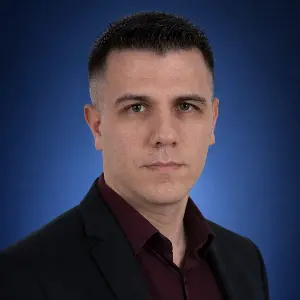
The man behind the madness.

  1. Origin / Brazil, 1980sPoverty. Pencil. Paper. An 8-bit computer.
  2. Age 18 / MicrosoftTechnical startup, Brazil.
  3. Age 21 / E-commerceWorld's first virtual supermarket.
  4. 2026 / Frontier AIStill building what doesn't exist.

The Mastermind

Marco S. Junior

Technology Polymath. AI Architect. Builder. Off-Road Engineer.

32+ years challenging what technology is supposed to be capable of.

The short version

Marco doesn't particularly love IT. He loves the power it gives him to turn imagination into reality.

He's a technology polymath, an unconventional technology leader and a builder who has spent more than three decades moving across disciplines, technological revolutions and seemingly impossible challenges.

His story began in poverty, in a developing country, long before the Internet made knowledge accessible to everyone.

From pencil and paper

Marco wanted to create Atari games when he was just 10 years old. To do that, he would have to learn programming.

So he did.

Without a computer of his own, he learned BASIC at a friend's house, spent weekdays writing programs using pencil and paper, and returned on weekends to test them on his friend's 8-bit machine.

To technological pioneering

At 18, Marco and his first line manager were technically responsible for Microsoft's startup in Brazil, working through one of its earliest local technology partners.

At 21, he built the world's first virtual supermarket, pioneering a new way of doing business at a time when commercial e-commerce barely existed. The Brazilian press would eventually call him the Father of E-Commerce in Latin America.

For approximately fifteen years, his name appeared almost weekly in the Brazilian technology press, where he became recognised as an expert, innovator and commentator on emerging digital technologies. His work also earned him an iBest Award, one of Brazil's best-known early Internet distinctions.

And that was only the beginning.

A specialist in many disciplines. Simultaneously.

Software Engineering. Architecture. Cloud. Data. AI/ML. UX/UI. Product Development. Marketing. Advertising. 3D Modelling. Animation. Digital Experiences. Business Strategy.

Marco operates with substantial expertise across all of them. His most unusual capability is the ability to bring these disciplines together, thinking across technical, creative, commercial and human dimensions while taking responsibility for the complete solution.

He never chose disciplines. The things he wanted to build chose them for him.

Intelligence beyond conventional engineering

Academically, he was once considered the worst student in school. Ironically, his first visit to a university was to deliver a lecture rather than attend one.

Today, he's completing an MSc in Artificial Intelligence at St Mary's University and preparing to pursue PhD research in 2027.

His approach to AI is fundamentally different from conventional software engineering. He believes too many engineers attempt to force probabilistic intelligence into deterministic architectures, using rules and rigid workflows to constrain models rather than understanding how to make them genuinely useful.

He advocates Model Empathy: understanding how models interpret context, instructions, information and human intentions. He combines this with agentic engineering, creativity, emotional intelligence and an unusually broad technical background to extract remarkable capabilities from AI systems.

Built for the situations without a playbook

Marco has spent his career at the beginning of technological revolutions: client-server computing, the commercial Internet, e-commerce, immersive virtual worlds, cloud and now generative AI.

He is particularly effective where the technology is immature, the problem is ambiguous, the conventional approach has failed and no established roadmap exists.

He calls this Off-Road Engineering.

Give him the destination. He doesn't particularly care whether there's a road.

That's the mastermind

His leadership style is direct, intensely autonomous, creative and mission-driven. He's comfortable advising executives, defining strategy, challenging established assumptions and getting his hands dirty building the solution himself.

He's far from the conventional polished executive, and he's spent years discovering that trying to fit that stereotype often suppresses the very qualities that make him effective. At Cat Criminals, those qualities are precisely the point.

The company reflects his belief that exceptional technology products require more than technical expertise. They require imagination, curiosity, courage, multidisciplinary thinking and the determination to make something real.

He imagines things. He builds them. He delivers value.

That's the mastermind behind Cat Criminals.

AcademiaMSc Artificial Intelligence · PhD research planned for 2027
PhilosophyGive him the destination. He doesn't care if there's a road.

Get in touch.

Tell us what's broken. We'll case the place.